After a month on hiatus, Formula 1 is back with the fabulous Miami Grand Prix. This is F1 turned up to 11: it’s busy, it’s raucous, it attracts more celebrities that you can shake a diamanté-encrusted stick at.
All of this rather tends to obscure the fact that the Miami International Autodrome (MIA) presents F1 teams with an invigorating, complex challenge that taxes driver, machinery and back-room brains – a fact that we’ll explore in The Risk Perspective, in partnership with Marsh, Formula 1's Official Risk Partner and Official Insurance Brokering Partner.
At every race, the decisions and compromises the teams have to make come with a certain degree of risk… but this weekend, the edge on that jeopardy is just a little keener: the frenetic Sprint programme leaves scant time for practice, and there’s a raft of new rules.
The strategists’ perspective
McLaren have won the last two Miami Grands Prix and, in 2025, became the first team in the Sprint era to take maximum points from a race weekend, with Lando Norris leading team mate Oscar Piastri over the line in the Sprint, and vice versa in the Grand Prix. On the pit wall, Racing Director Randy Singh leads McLaren’s strategy group, and claims there are a lot of variables to consider heading to Florida this week.
“At any race, there are always some unknowns on tyre behaviour,” says Singh. “Typically, you learn at a track year-on-year, and learn about your car across the season. The latter is the biggest unknown at the moment for strategy, because we’ve only done three races.”
One of the crucial calls the strategists of front-running teams always have to make is deciding on what constitutes a ‘safe’ time from a Qualifying lap. The car that has a good first attempt may sit the rest of the session out, and save their tyres for later in the weekend – but the confidence to do that depends on understanding how much the track will evolve as rubber goes down, and what pace slower cars are capable of delivering.
At the moment, this is a complex puzzle: the cars are new for 2026; the energy management rules in Qualifying are changing this weekend… and we’re likely going to see plenty of upgrades in Miami.
“It hasn’t been straightforward this year, because you don’t really have a good amount of empirical data yet regarding other people’s pace,” says Singh. “Typically, it moves around more at the start of the season, and Sprint events are difficult for the first Qualifying sessions on Friday – without having seen much running. There will also be upgrades on various cars to consider.
“What will make it a little simpler, however, is that the Sprint Qualifying 1 and 2 decisions are subtly different to what you do in main Qualifying, because you’re not deciding whether to use another set of tyre – just how much to use the one set you’re allowed.”
The Sprint conundrum
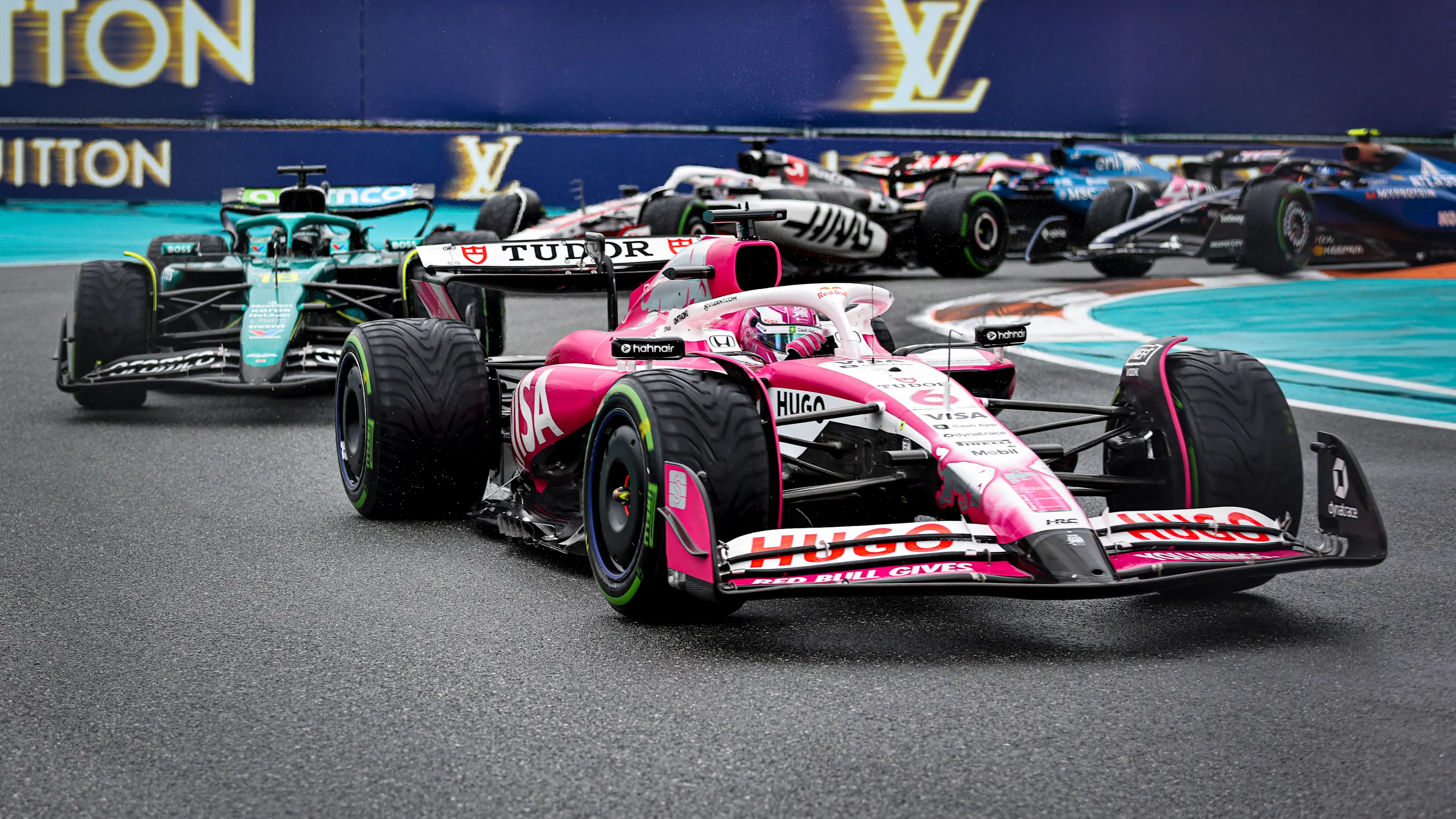
The tyre allocation at a Sprint weekend is different to a ‘normal’ race, with each car receiving two sets of hard tyres, four sets of mediums and six sets of softs. To add a little extra spice, the rules for Sprint Qualifying have obligatory compounds: new medium in SQ1; another new medium in SQ2, and new soft for those that make it through to SQ3. It never seems like the teams have enough sets of tyres to do everything that want to do – which, of course, is the whole point.
“The toughest strategic decision tends to be what tyre you’re going to run in the single free practice session,” says Singh. “It’s usually a choice of medium or hard. Use the hard, and you’ll only have one available for the race… but use a medium, and you don’t really have enough mediums to get you through the two Sprint Qualifying segments, and the Sprint, and the race.
“You don’t have any track running to help you make that decision, so you have to rely on your information from other events this year, from last year at Miami, and what you’ve seen in simulation and analysis at the factory.
“The other big strategic decision to make is the Sprint start tyre. You’re always trading. It might be the choice between a soft and a medium compound. The soft is a risk because you won’t have done much running on it before the Sprint, and you don’t know how it will perform over the Sprint distance. Even if you’ve made the decision to run a medium, there’s a choice between a new set, and one of the used tyres from Sprint Qualifying. The new tyre may be better for the Sprint – but you may want to keep that for the start on Sunday.”
The key section
The Miami International Autodrome has plenty of overtaking potential… but the place where the drivers really make a difference is in the intricate stadium section between Turns 11 and 16. The track here is fiddly, with low-speed corners and elevation changes, jinking underneath the Florida Turnpike access-ramps.
Speeds have to be kept low to meet safety requirements for bridge clearances and traversing a crest. And while F1 cars look at their best when they’re flashing through fast corners at incredibly high speeds, the drivers really earn their corn with precision through slower sections of track. There’s more time to be gained or lost threading the eye of the needle here.
The ideal set-up
There are interesting variables at the MIA. In years past, the usual approach has been to compromise slightly, running less downforce than would be optimum for a Qualifying lap, to ensure the cars are quick at the end of the straights. There’s not quite the same trade for 2026, with the three straights all being straight-mode zones, where the cars will automatically go into their low-drag configuration.
The very quick sweepers in the first sector can lull spectators into thinking this is a high-speed track – but realistically it’s one of the lower-speed circuits F1 visits. Teams will want to run over the kerbs and narrow the trajectory in those slow corners, and will do that by softening-off the roll stiffness.
The surface of the track, however, is very smooth, which will allow the teams to keep their heave stiffness quite high, which will help optimised aerodynamic load.
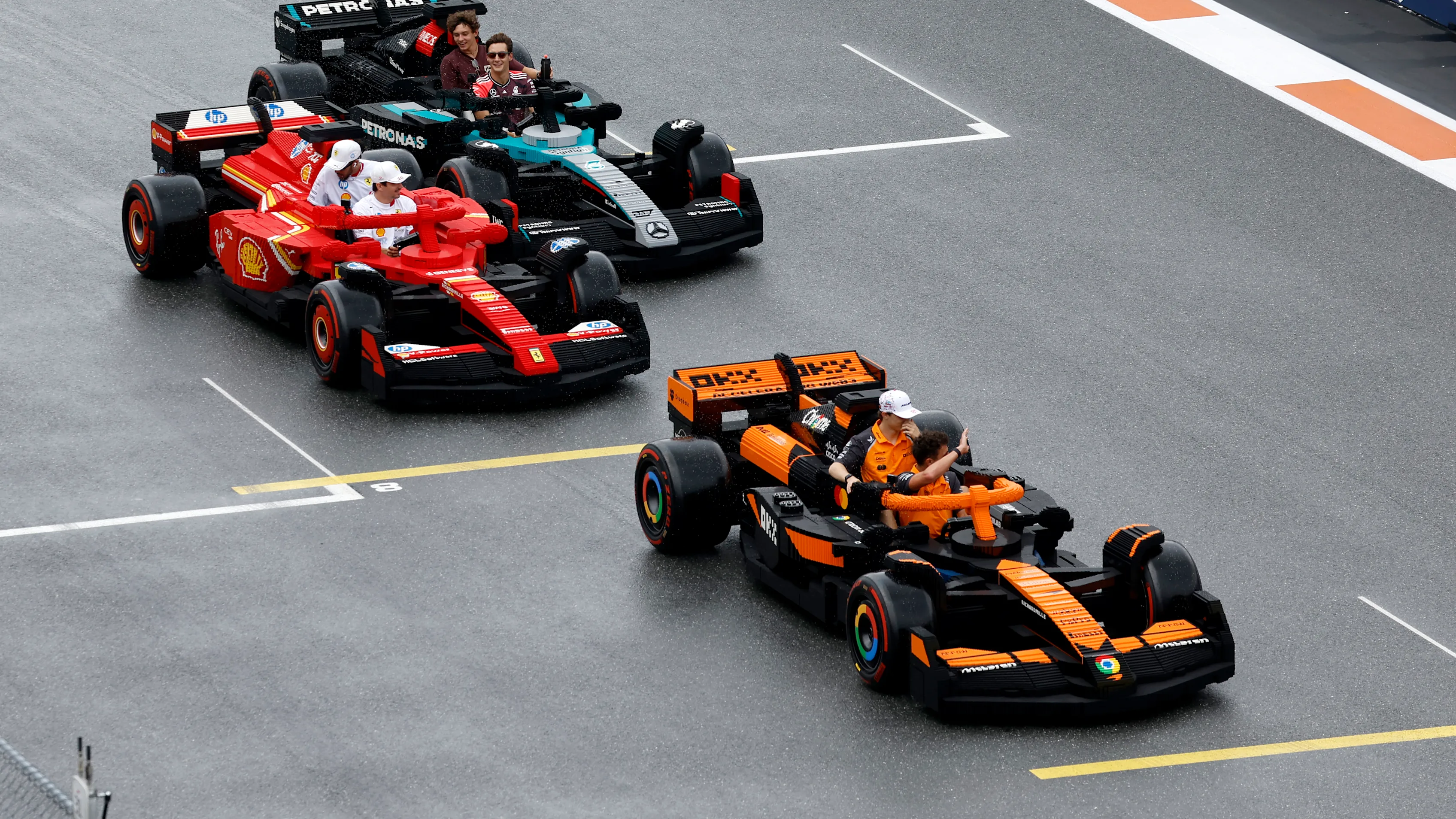
The greatest race: Lando Norris’ debut victory in 2024
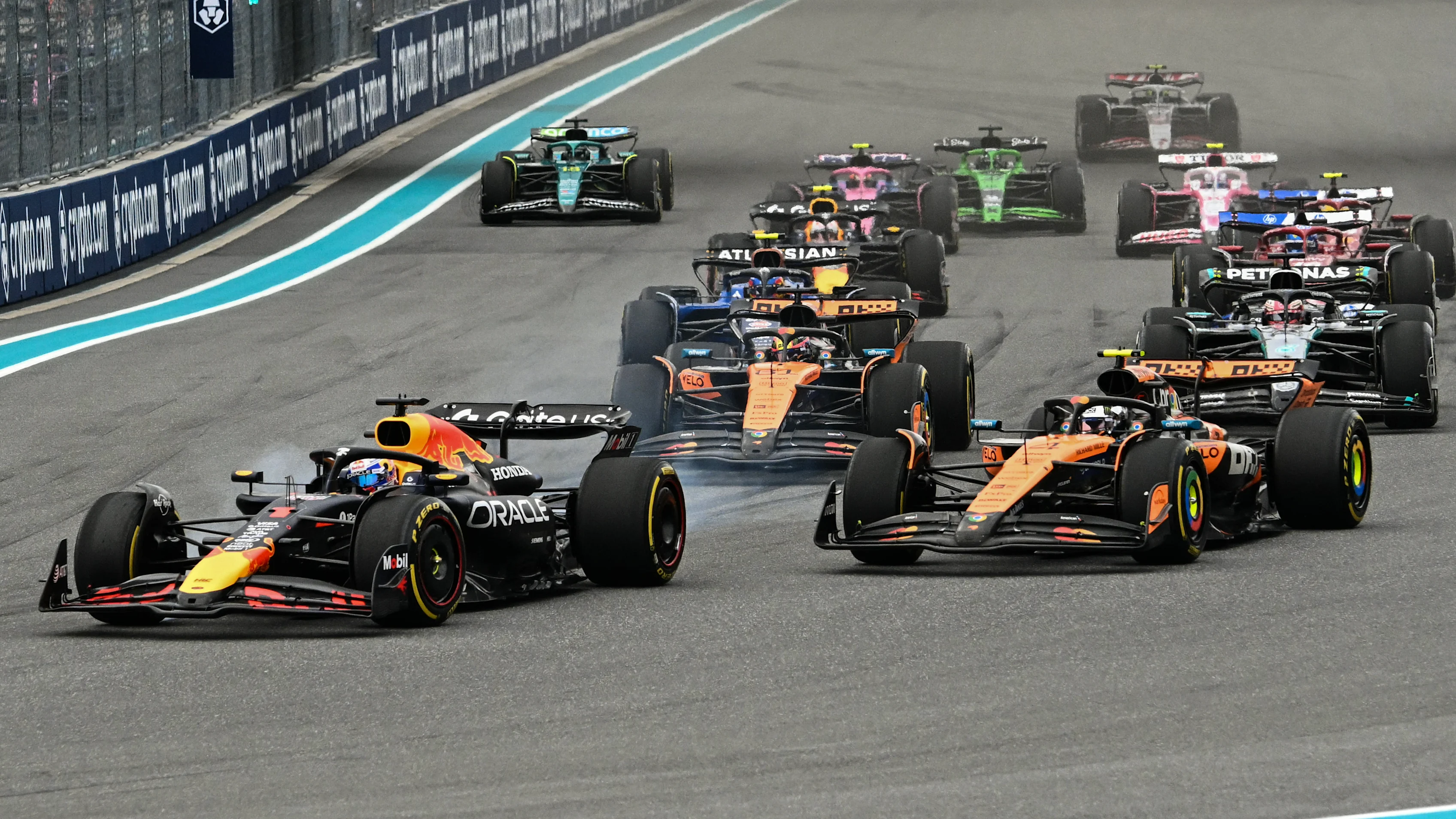
The Miami Grand Prix debuted in 2022. Each race has had its moments, but perhaps the most memorable was Lando Norris’ win in 2024. The race hinged on a Safety Car. Lando was running sixth at the start, on the tail of a group that pulled away from the midfield. Like the rest of the front-runners, he started on a medium tyre. Norris looked after his tyres, didn’t over-push, and moved up the order as the cars ahead pitted. He led by Lap 27. His pace was good, he was making the overcut work, but the cherry-on-top was the Safety Car that came out on Lap 29.
A green flag stop cost 17s, which fell to 9s with a Safety Car. Norris was able to pit and retain the lead. Fortuitous timing for Norris, but equally, anyone who stopped earlier to undercut or defend against an undercut with a new, faster tyre, understands they’re risking exactly this scenario.
The drivers’ perspective: Lando Norris
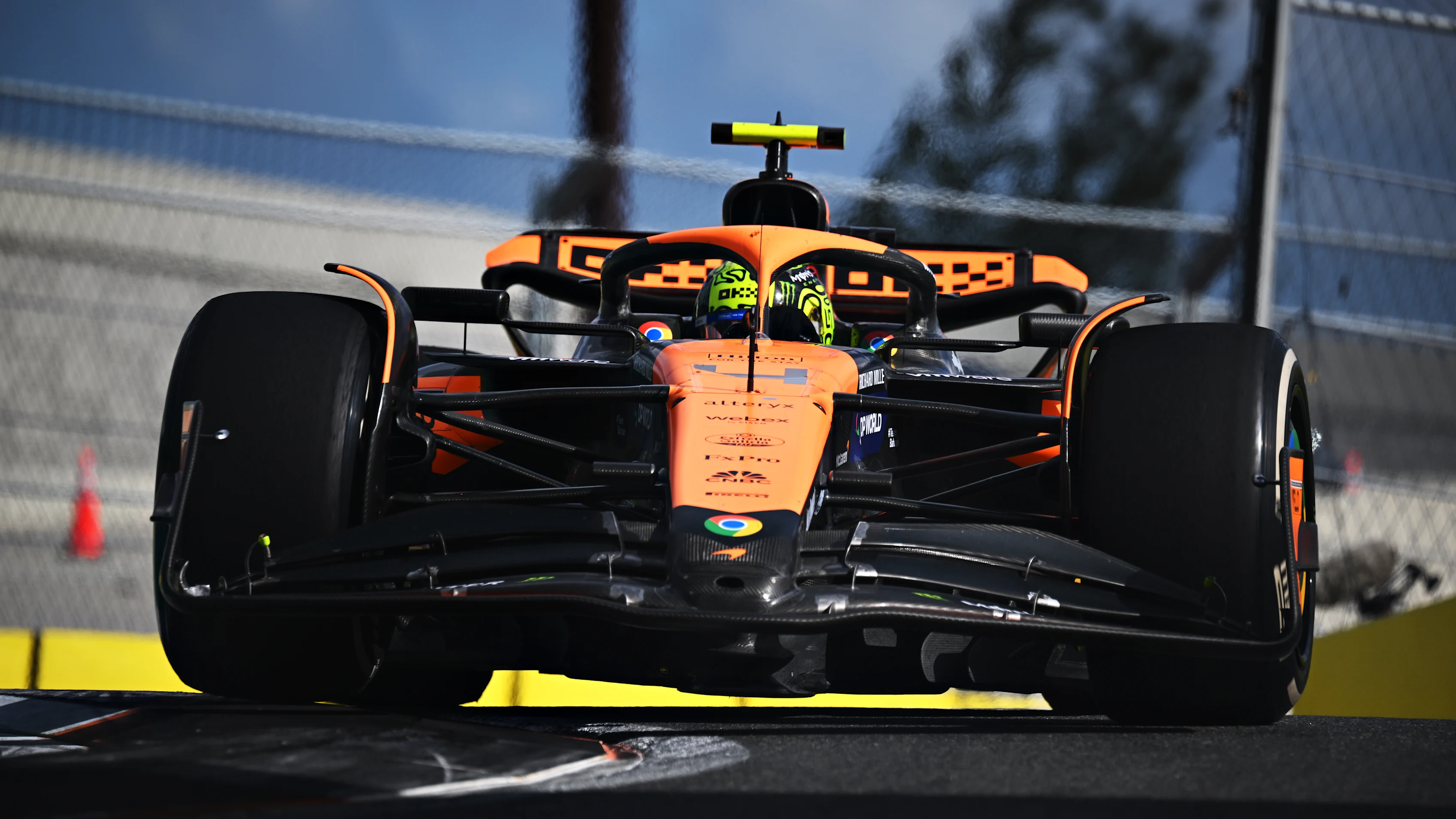
That was Norris’ debut F1 victory, and he’s since added to his trophy haul in Miami with victory in the 2025 Sprint and second place in the Grand Prix. While the cars are very different for 2026, he doesn’t believe that will fundamentally alter the nature of the race in 2026.
“In some ways, it doesn't change too many things,” he says. “We’ll still have a high-speed first sector, and a very slow-speed middle sector. In some ways because of how the straights and corners are laid out, you could have some pretty good racing in terms of how you can use – or save – the battery.
“Use it too much to make a pass and you know the guy is going to come straight back past you on the next straight – but it could be a great race. We’ll really have to wait and see.
“It's obviously a track that we’ve performed very well at – as a team, not just as drivers – over the past couple of years. Last year, it was one of our best tracks of the season in terms of pace, and [this year] it might still just suit the car a little bit more than some other places.”
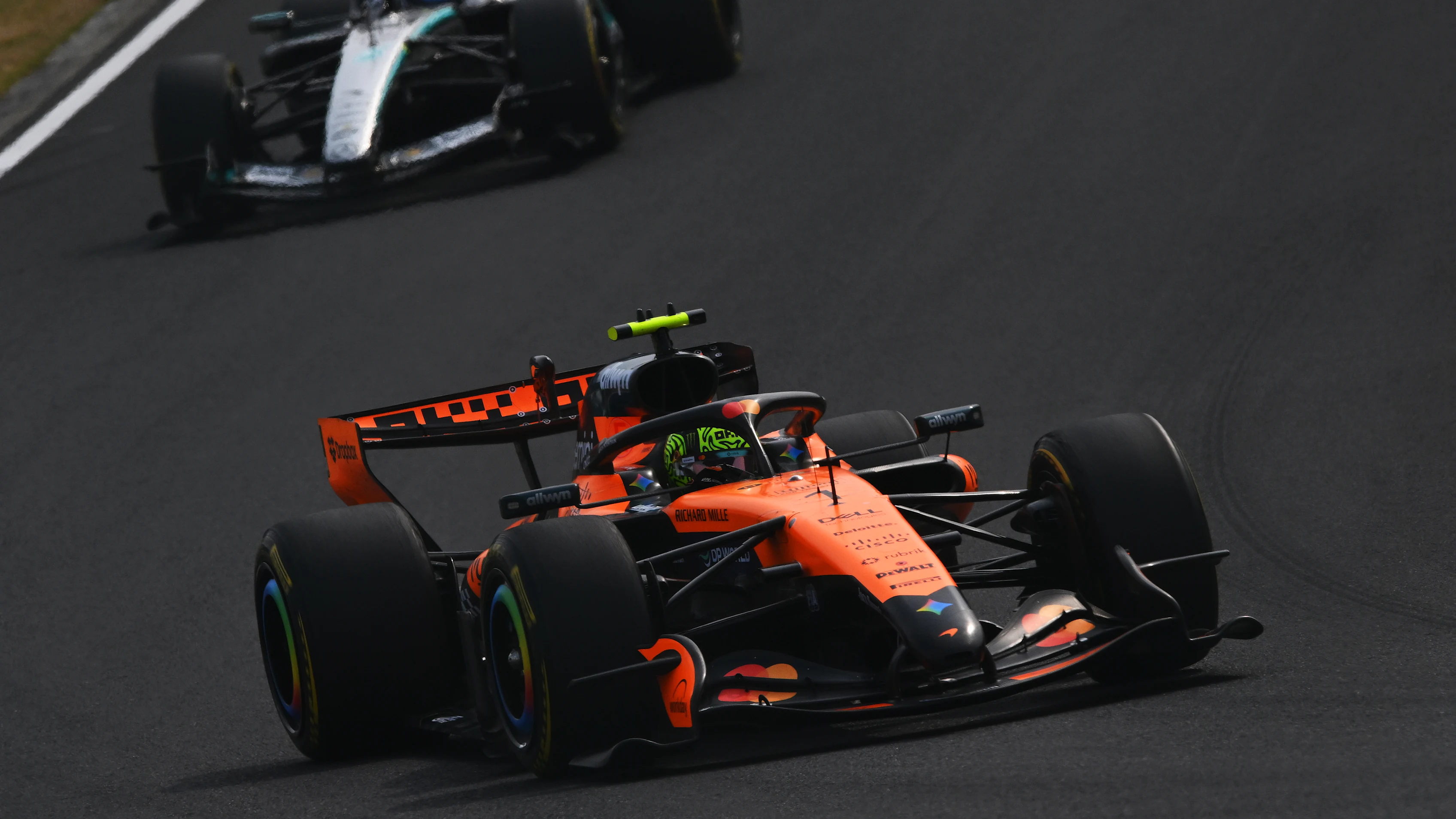
The strategic masterstroke: Max Verstappen’s hard-tyre start in 2023
Back in 2023, Max Verstappen went in the race on the backfoot, starting ninth… and decided to deviate from the bunch. Eight of the top 10 starters unwrapped a medium tyre on the grid, but Verstappen, along with Alpine’s Esteban Ocon, opted for the hard compound.
It’s not that unusual a choice for a fast car out-of-position, with the aim of running a long first stint, to use the pace and gain track position when the medium and soft starters pit off. In Verstappen’s case, however, it simply allowed him to push harder for longer on the more robust compound, and do his overtaking on track: eighth on Lap 3, sixth on Lap 4, fifth by Lap 8, fourth by Lap 9.
Carlos Sainz was dispatched on Lap 14, and Fernando Alonso on Lap 15. That got Verstappen onto the tail of team mate Sergio Perez, and into the lead as Perez pitted at the end of Lap 20.
He was able to push on and build a gap before his own stop on Lap 45, coming out just 1.7s behind Perez. The huge tyre delta allowed him an easy pass, and a cruise to the line. It really was a mountain Max had to climb at MIA, but with perfect strategy, he made that climb look like a gentle amble through a citrus-scented meadow.
The Risk Perspective is brought to you in association with Marsh, Formula 1’s Official Risk Partner and Official Insurance Brokering Partner.
Next Up
Related Articles
 How Lawson helped Lindblad by sacrificing his Q3 run
 BettingWhy F1 fans should avoid emotional bets in Austin
 What the teams said – Qualifying in the United States
 Russell reflects on Austin Qualifying struggles
 BettingBest Qualifying bets before the United States GP
 Hamilton explains Ferrari’s Qualifying deficit in Austin