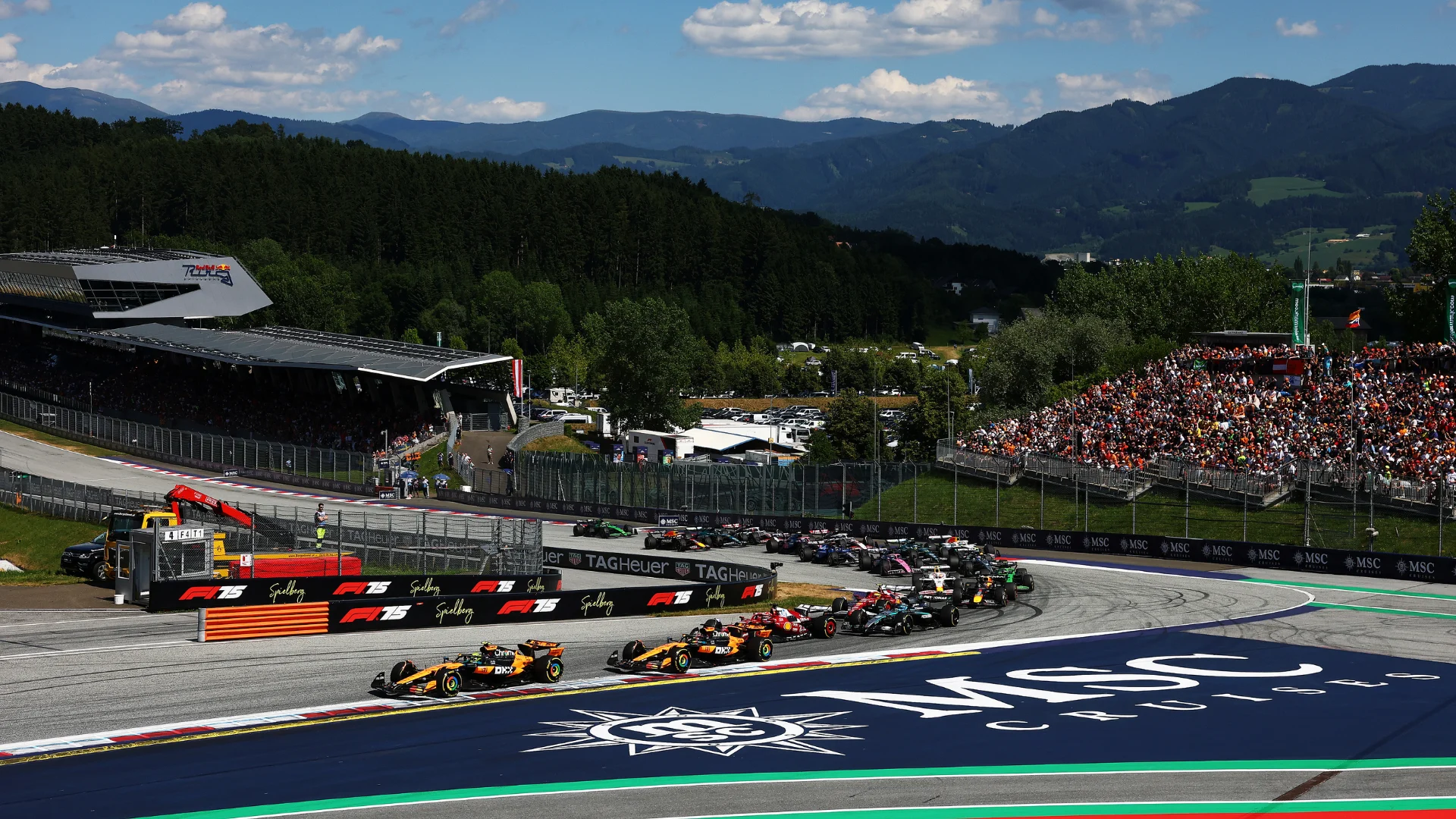
After a week off, F1 returns to action this weekend with the Austrian Grand Prix. But how much do you know about the Red Bull Ring track? F1.com has your all-in-one guide…
Key Red Bull Ring statistics
- Circuit length: 4.326km
- Number of turns: 10
- Number of laps: 71
- Race distance: 307.018km
- Lap record: 1m 07.924s – Oscar Piastri (2025)
When was Austria’s first Grand Prix?
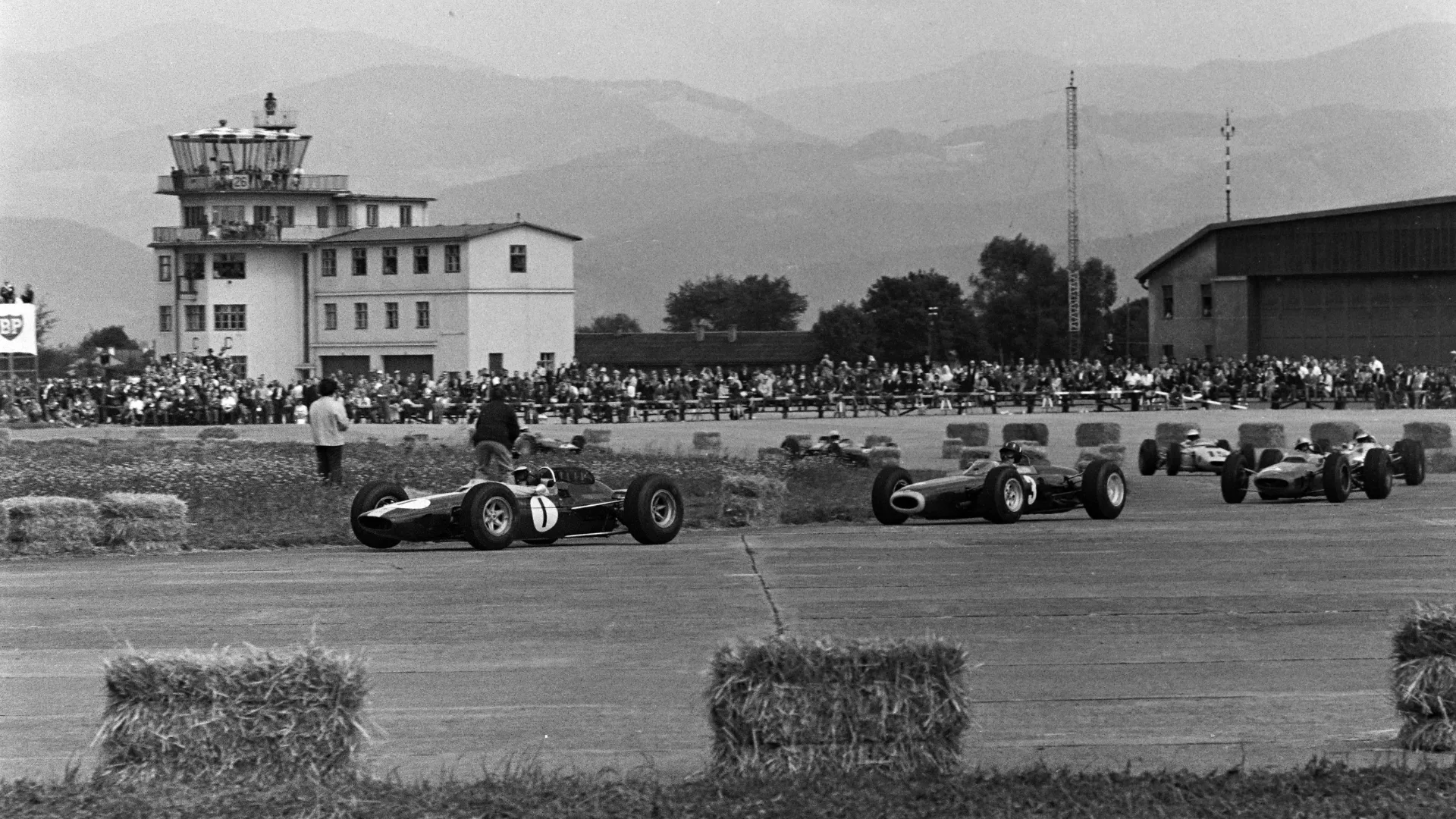
Austria first played host to a World Championship F1 Grand Prix back in 1964, at the Zeltweg Airfield circuit, before moving over to the Österreichring – the original track that is now known as the Red Bull Ring – from 1970 through to the late-1980s.
After almost a decade off the calendar, the fearsome Österreichring was turned into a shorter, modernised circuit renamed as the A1-Ring, bringing F1 back to Austria for another seven-year period across the late-1990s and early-2000s.
Another break and another revamp followed, with billionaire Red Bull co-founder and owner Dietrich Mateschitz purchasing the A1-Ring in 2004 and rebranding it as the Red Bull Ring, alongside the Red Bull Racing and Scuderia Toro Rosso teams he would establish.
Austria made its latest F1 comeback in 2014 and has remained in place since – Max Verstappen’s victories at the Spielberg venue in 2018, 2019, 2021 and 2023 giving Red Bull something to shout about on their home soil, and at their very own track.
What’s the circuit like to drive?
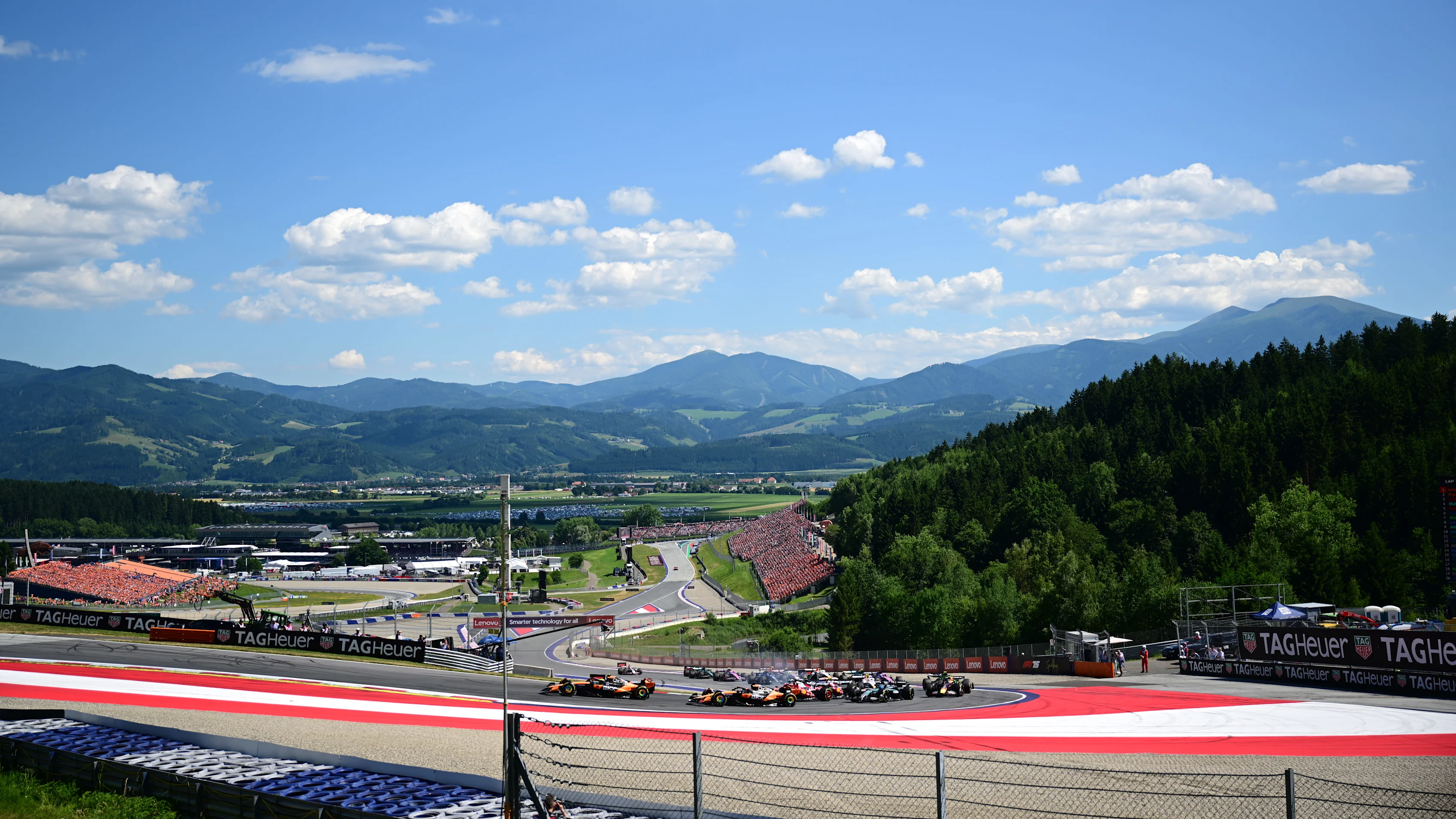
While it is a short lap, the Red Bull Ring packs a lot into just over four kilometres.
The first half of the circuit rewards power, as cars blast along three straights punctuated by a pair of uphill right-handers – the run to Turn 3 a particularly steep one.
Then, as drivers work their way downhill, the track turns into toboggan ride, canyoning through a series of quick corners, including the exhilarating Rindt right-hander, named after Austria’s first F1 champion, Jochen.
Jolyon Palmer, former Renault F1 driver, adds: “Austria is a picturesque circuit, really undulating, which makes it nice to drive and characterful.
“You’ve got to be careful with the kerbs as it’s very easy to get straddling or to get over some more abrasive ones, which can inflict a bit of damage to your car, but beyond that, it’s a short and relatively simple circuit with some hidden technicalities.
“Turn 1 is always quicker than you think it’s going to be, but braking is the order of the day for the first sector. Turn 4, a downhill braking zone, is the easiest one to mess up – so many drivers end up in the gravel there on the exit.
“There’s overtaking aplenty in Turns 3 and 4, and then the flow through the second half of the lap is really good as it just comes around so quickly. It’s one of the fastest on the calendar and it really feels it at the wheel. You barely get a breath through this Grand Prix.”
Austria is a picturesque circuit, really undulating, which makes it nice to drive and characterful.
Where are the Straight Mode zones and overtake detection?
As a reminder, and as explained in our pre-season summary of regulation changes, Straight Mode is a different aerodynamic configuration that allows cars to reduce their drag, making them more efficient when accelerating up towards top speed.
The rear wing continues to open up a gap – just like it did when drivers used DRS (the Drag Reduction System) in the past – but now the front wing also moves. The uppermost front wing elements drop down at the same time the rear wing’s top element does.
This is a mode that is used on every single lap in dry conditions, in every area that is designated for it. Essentially, the car will adapt between two different configurations depending on where it is on the track, providing maximum downforce in corners but then less drag on straights.
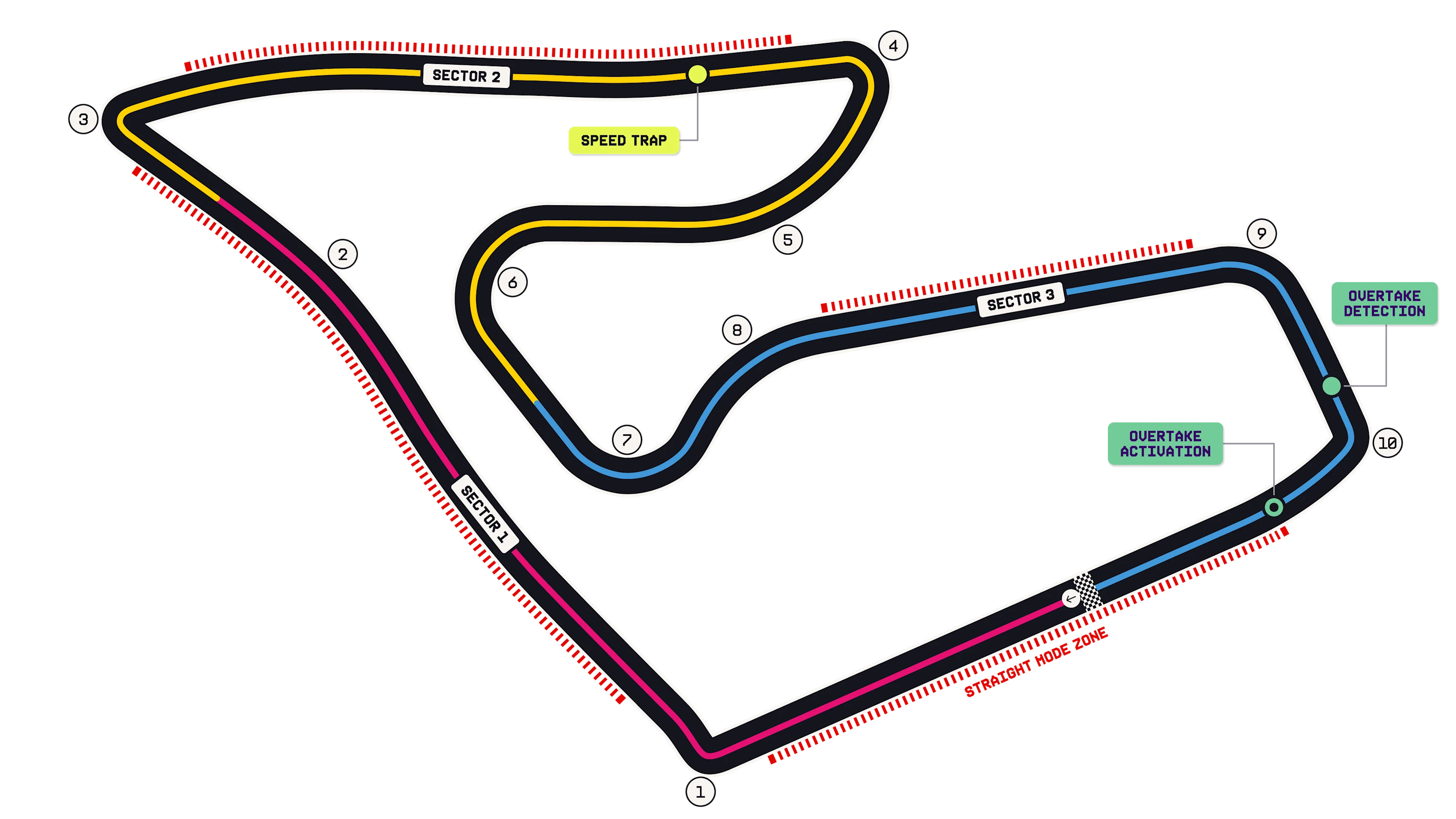
In Austria, there are four designated Straight Mode zones, beginning with a run along the start/finish straight, then between Turns 1 and 3, between Turns 3 and 4, and finally between Turns 8 and 9.
Meanwhile, Overtake Mode replaces DRS and is a new power mode that allows a driver to recharge more electrical energy, and generate an additional electrical power profile, so they can sustain a higher speed for a longer period.
There is one detection point per lap for this mode – expected to be out of the final corner on many occasions, leading onto a long straight – and it will be available to drivers on the following lap as long as they stay within a second of the car in front at that detection point.
Around the Red Bull Ring, the Overtake Detection line comes just before the entry to Turn 10, while the Overtake Activation line follows at the exit, leading onto the start/finish straight.
Five fun facts about the Austrian Grand Prix
- 2026 will mark the 40th Grand Prix to be held in Spielberg (at the Österreichring, A1-Ring or Red Bull Ring*)
- Eight of the last 12 Grands Prix held in Spielberg have been won from the front row of the grid
- Max Verstappen has won the most Grands Prix in Spielberg with five victories
- McLaren and Mercedes have won the most Grands Prix in Spielberg with seven victories each
- Ferrari have achieved the most podiums in Spielberg with 29
*Including the 2020/21 Styrian Grands Prix
Next Up
Related Articles
 What the teams said – Qualifying in the United States
 UnlockedWhat are the tyre strategy options for the United States GP?
 BettingBest Qualifying bets before the United States GP
 AS IT HAPPENED: All the action from Qualifying for the US GP
 OFFICIAL GRID: Who starts where for the United States Grand Prix
 Bemused Wolff celebrates Antonelli’s ‘miracle lap’ in the US