The beginner’s guide to F1 tyres
Our beginner’s guide provides all you need to know about why tyres are so important in Formula 1.
Tyres are the only parts of a Formula 1 car that actually touch the racetrack and, as such, serve as a crucial reference point for drivers. Our beginner’s guide provides all you need to know about these highly advanced black circles of rubber…
Who supplies F1 teams with tyres to go racing?
Italian manufacturer Pirelli have supplied F1 teams with tyres since 2011, making a return to the sport after previous spells of involvement in the 1950s, ‘80s and ‘90s.
Indeed, Pirelli were one of several companies to provide tyres at the start of the World Championship back in 1950, with a host of brands making appearances over the decades, during which time tyre technology has advanced as quickly as the cars.
Unlike some previous eras, where multiple tyre manufacturers competed against each other and created what was known as a ‘tyre war’, Pirelli are now F1’s sole, exclusive supplier, with an agreement running through the end of the 2027 campaign.
What tyres are used in F1?
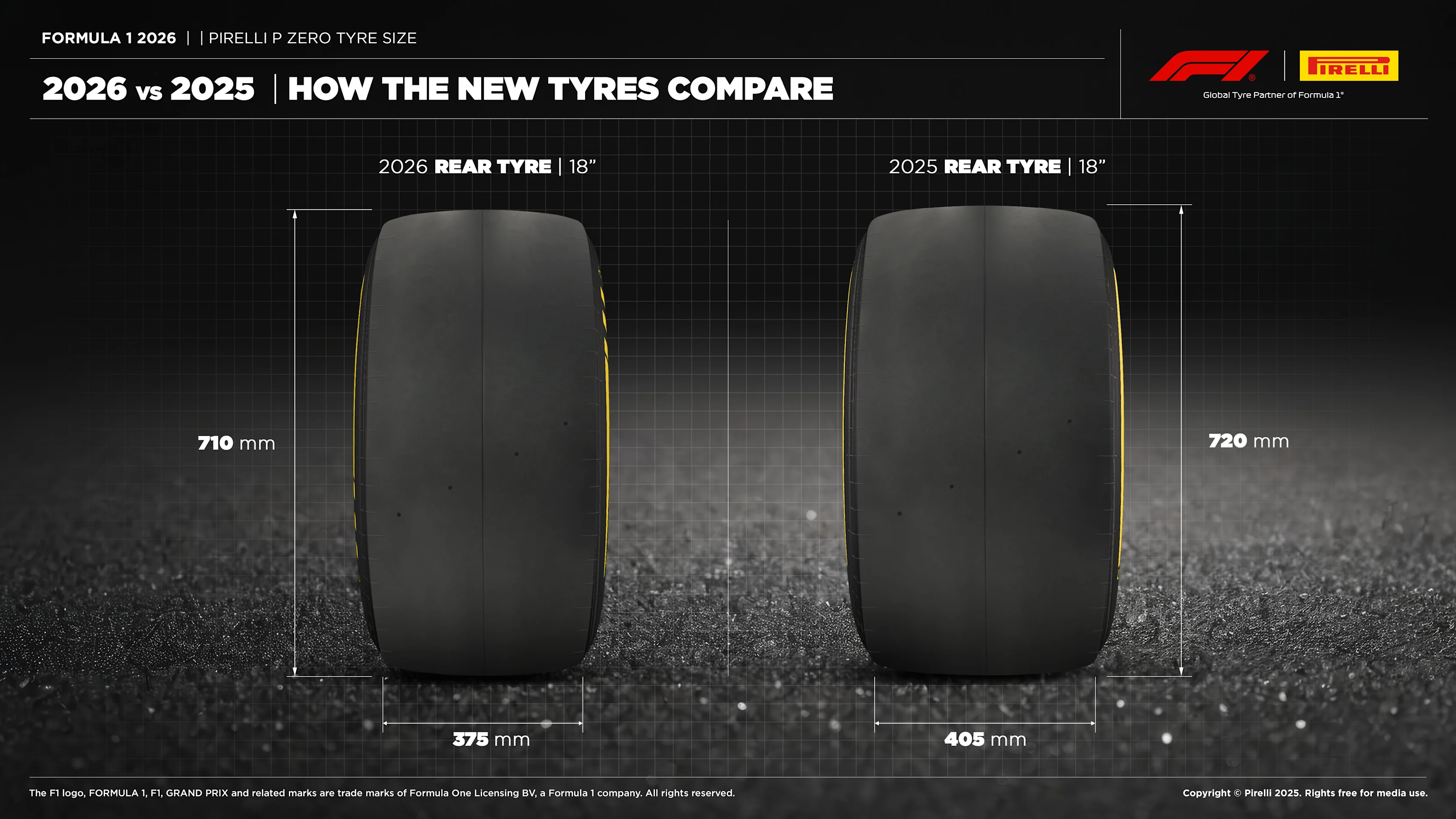
With the brand-new regulations coming into play for the 2026 season, so too are all-new tyres. Compared to 2025, the Pirelli tyres are now smaller to suit the new cars created for the latest rules.
While the wheel rim diameter is still 18 inches, the tread width is 25mm less at the front and 30mm less at the rear. The total diameter is also 15mm less at the front and 10mm less at the rear.
Away from the track, Pirelli continue to focus on research and development of sustainable tyre solutions in their support of the sustainability targets set by F1 – with the sport aiming to be Net Zero Carbon by 2030. Pirelli became the first company to produce a complete range of Forest Stewardship Council–certified tyres for motorsport, with Formula 1 becoming the first motorsport competition to use them.
What about the tyre compounds used at each track?
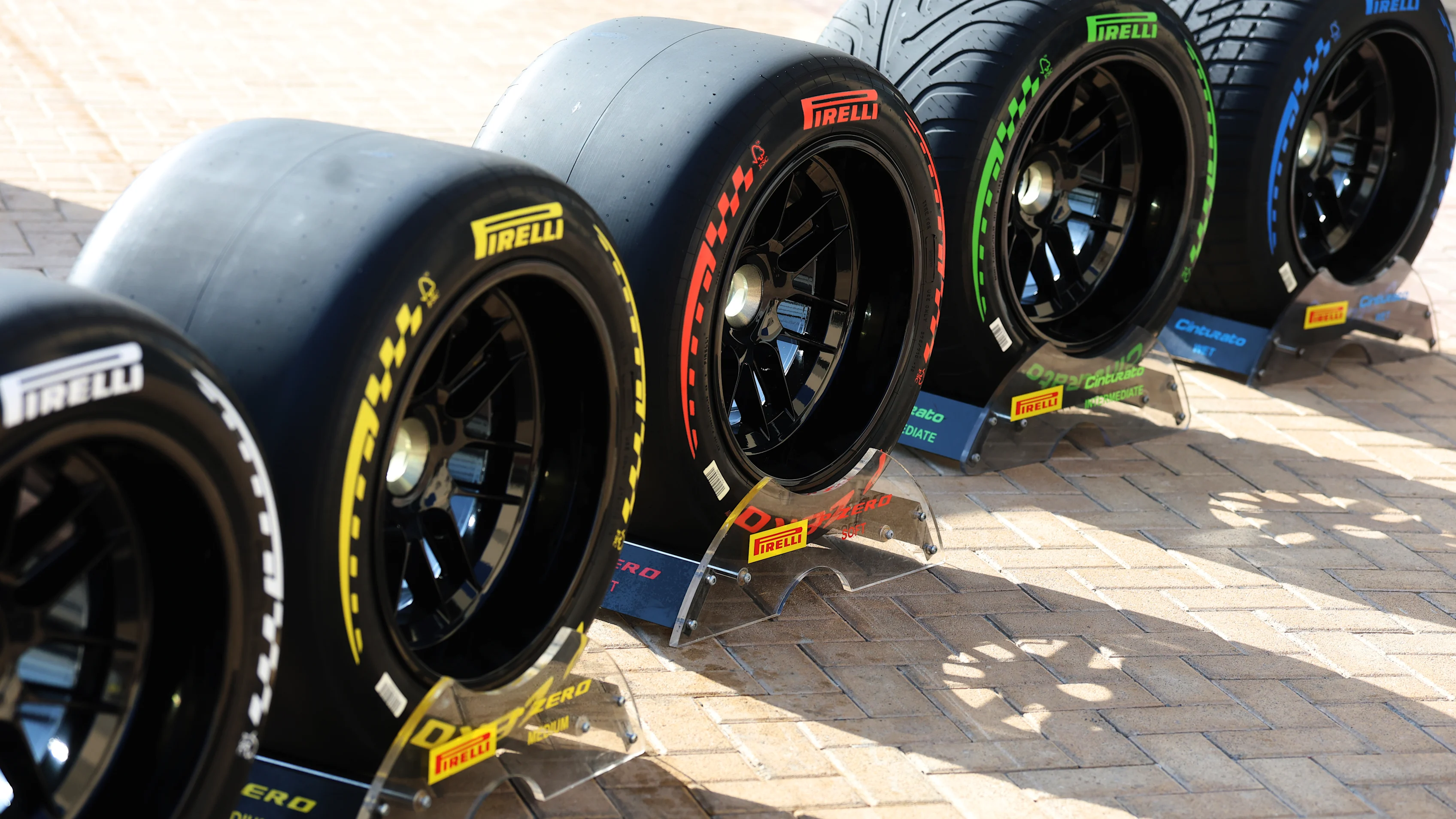
Pirelli’s range of 18-inch tyres for the 2026 campaign comprises five 'slick' compounds (from hardest to softest: the C1, C2, C3, C4 and C5), along with 'intermediates' and 'full wets' to account for inclement weather conditions.
From the C1-C5 slick range, Pirelli pick three compounds to be used at each Grand Prix, taking into account track characteristics and climates – the hardest trio chosen for venues where the tyres are generally subjected to greater demands, and vice versa.
The highest-numbered slick tyre is marked red for the weekend and known as the 'soft' tyre, the middle choice is marked yellow and known as the 'medium', while the lowest-numbered is marked white and known as the 'hard' tyre, – all sitting alongside the green intermediate and blue full wet tyres.
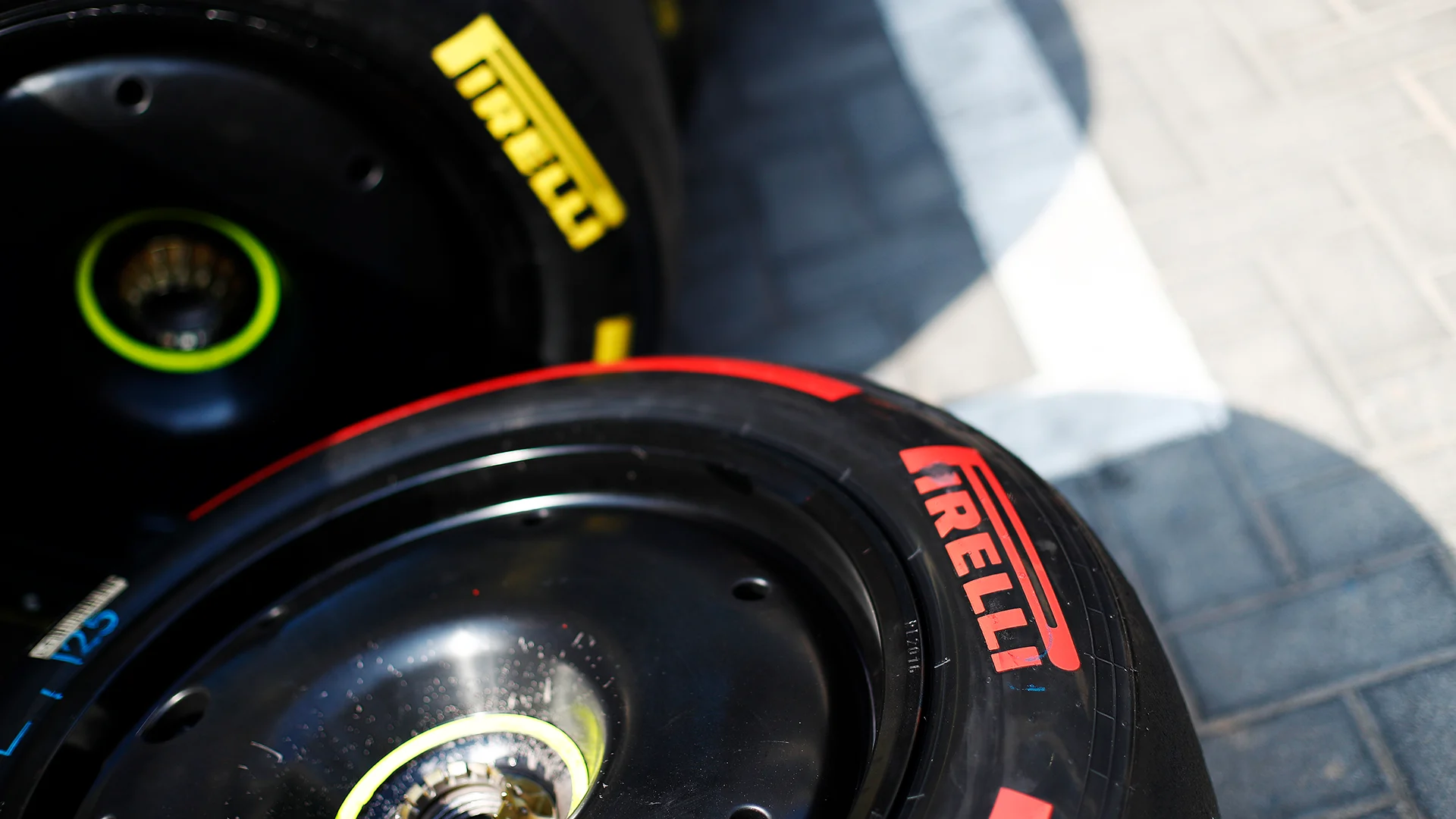
In theory, the soft compound will offer the most amount of grip but only for a short period of time before they degrade, making them ideal for qualifying runs, while the hard compound is the opposite – lasting much longer but offering less grip (and slower lap times as a result). The medium and hard compounds are likely to be more favourable options over a race distance.
How many tyres do drivers get each weekend?
On a standard Grand Prix weekend, drivers are given 13 sets of dry weather tyres, five sets of intermediates and two sets of full wets. An extra set of softs is reserved for those who reach Q3 in Qualifying, while all drivers must use at least two different slick compounds during the race, providing the track is dry.
An exception to this allocation is in Monaco where three sets of wet tyres will be available on top of the usual number for every other compound.
At Sprint events, the allocation of slick tyres drops from 13 sets to 12, with drivers getting two sets of the designated hards, four of the mediums and six of the softs. The total number of wet-weather sets rise to eight, but becomes six intermediate and two wet sets.
For more information about Pirelli’s F1 tyres, visit pirelli.com.
Next Up
Related Articles
 OFFICIAL GRID: Who starts where for the United States Grand Prix
 Sainz 'not expecting miracles' after Williams struggle in US
 Gademan grabs second win with assured Austin drive
 Hamilton explains Ferrari’s Qualifying deficit in Austin
 AS IT HAPPENED: Third practice in the United States
 Verstappen baffled after missing out on Austin pole