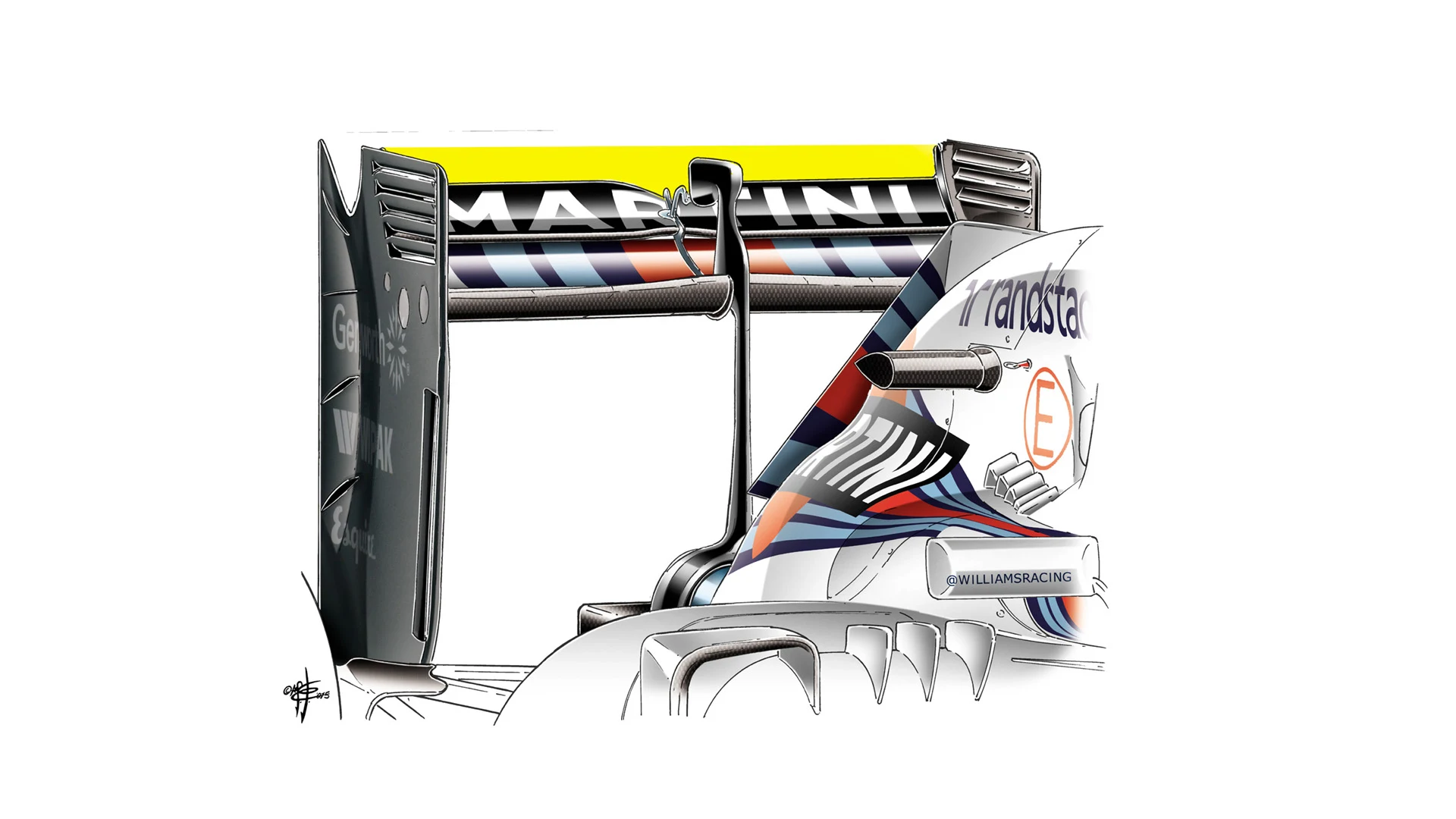
The high-speed nature of Italy’s legendary Monza circuit means all the teams run special, low-downforce wings on the rear of their cars. We review the approaches taken by three of the frontrunners…
Williams FW37 -Williams have opted for the easiest and least expensive low-downforce solution; to simply cut 3 to 4 cm off the top flap (yellow area), reducing drag and downforce. A similar but less extreme solution has been used by Toro Rosso. As is traditional here, Williams have been strong on top speed. It follows an error in this area at the last round in Belgium, where they carried too much downforce, which hurt them on the straights of Spa-Francorchamps.
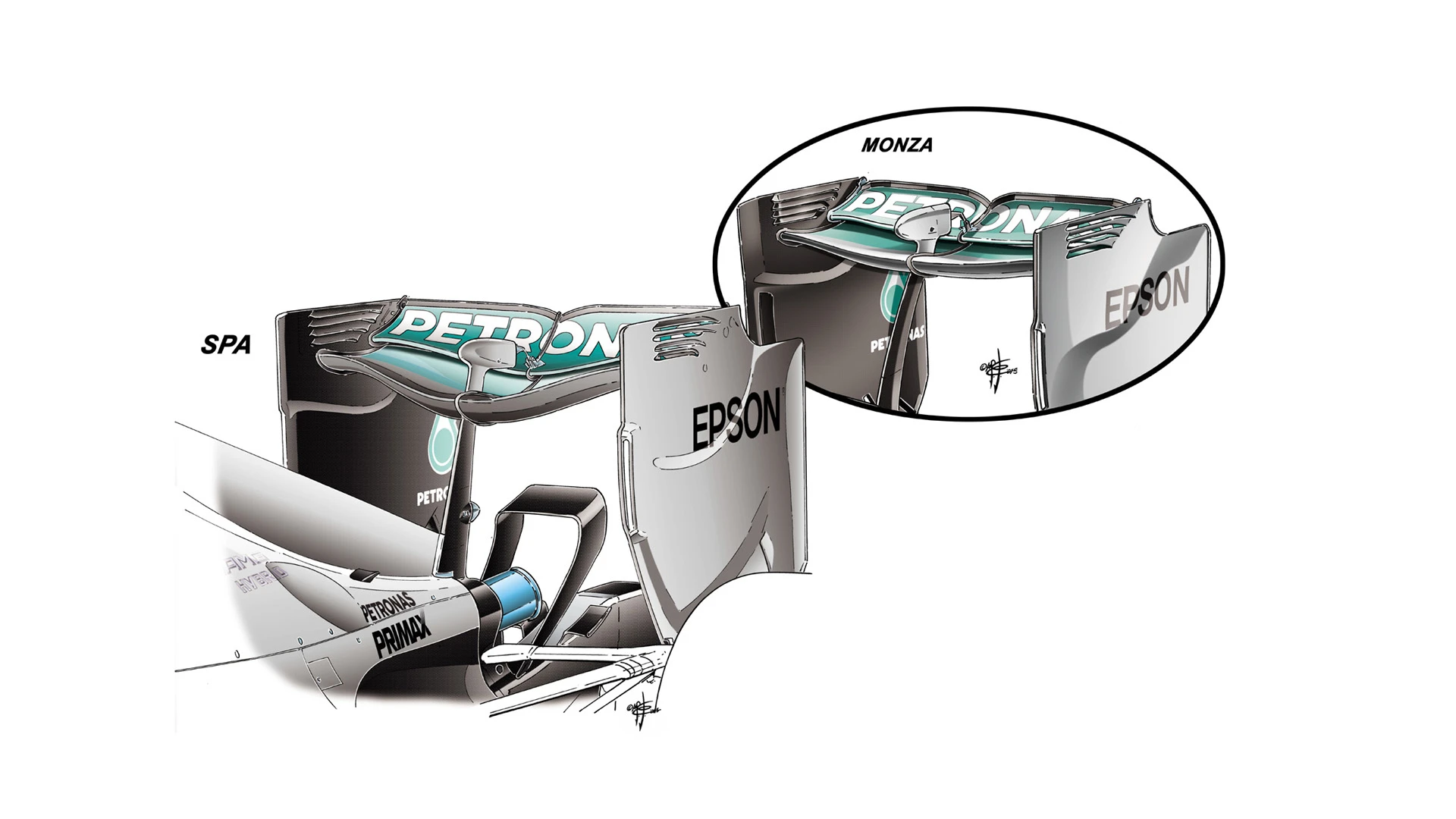
Mercedes F1 W06 Hybrid - In Belgium Mercedes drew much attention with their sculpted, spoon-shaped rear wing (main drawing) - which proved very effective. And although the team are dominating the season and have an almost unassailable points lead, they are still pushing very hard to introduce updates at every race. After the surprise of the Spa design, for Monza they have brought a brand-new, low-downforce rear wing (inset) with less curvature and without a monkey seat. There is also a subtle gurney flap to help the car in the slower corners.
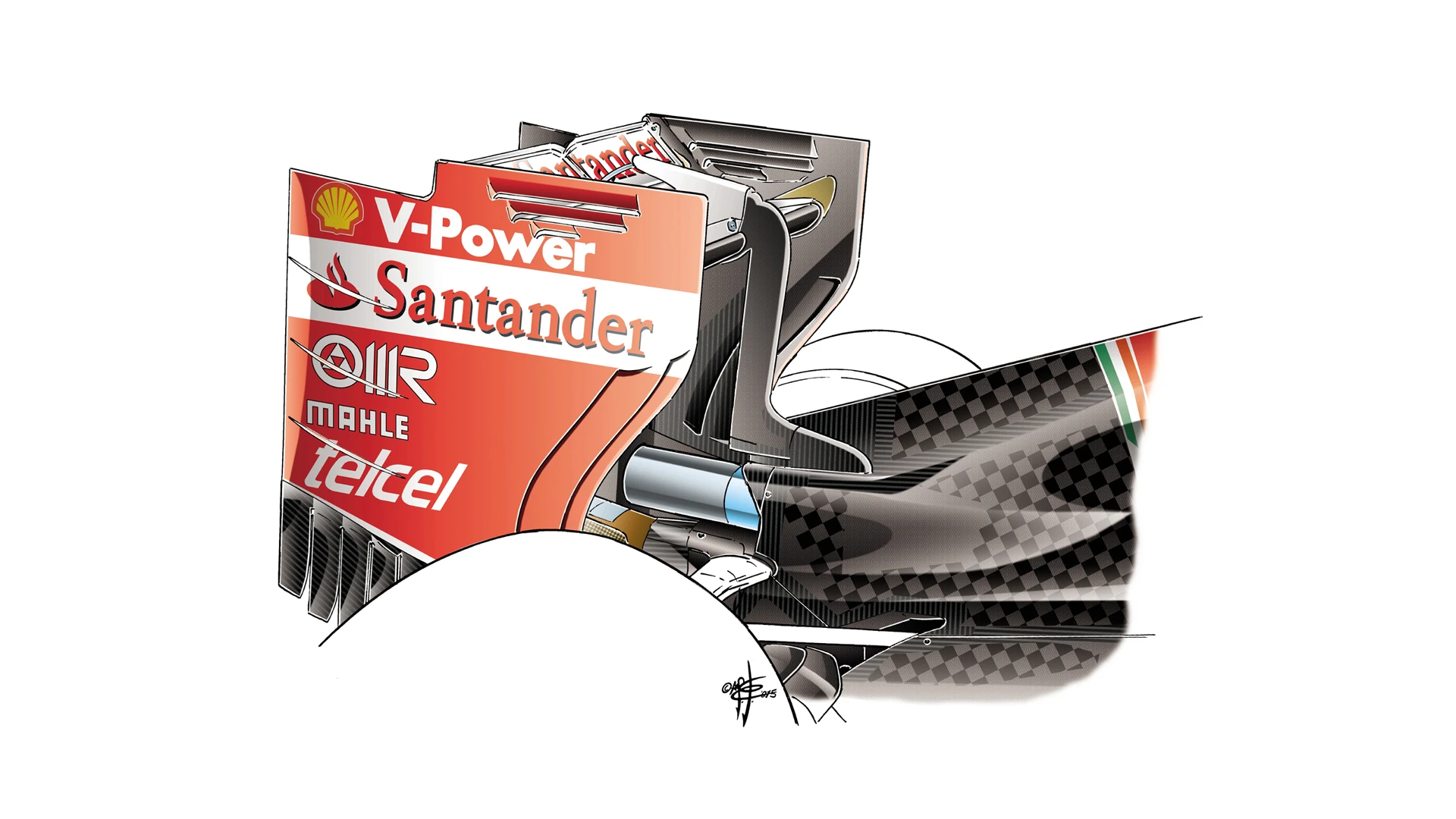
Ferrari SF15-T - For Monza, Ferrari have retained the same front wing as Spa, but brought a new low-downforce rear. It features new endplates with two large slots and one small horizontal slot on top, and a short-cord main plane. As in Belgium, Ferrari have reverted to the bodywork package from before the Spanish round, which is better on high-speed tracks. Along with an improved power unit - utilizing three development tokens - it means Ferrari appear to have taken a good step forward in performance for their home race.
Next Up
Related Articles
 'Bit of a shock to the system' leading Cadillac – Budkowski
 Alpine announce Mike Elliott as Chief Technical Officer
/GettyImages-2295023319.webp) Spanish GP 'probably my best race weekend' – Colapinto
Spanish GP 'probably my best race weekend' – Colapinto The power unit manufacturers with the most wins in F1 history
/Tsunoda%20header.webp) Tsunoda reveals his biggest mistake at Red Bull in 2025
Tsunoda reveals his biggest mistake at Red Bull in 2025 ExclusiveFootball legend José Mourinho on his love for F1